
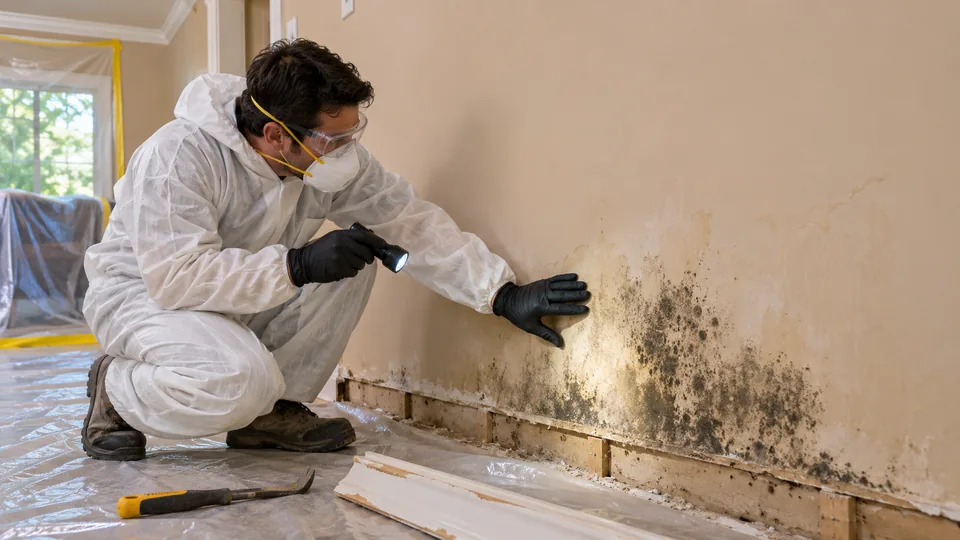
Mold along baseboards
Water can follow the bottom of a wall. Tell the provider whether spots continue along the same edge into another room.
Columbia, SC
Get wall mold removal in Columbia, SC for visible growth, damp trim, or suspected mold inside a wall. Call to discuss where the water entered and which parts of the wall may be affected.
Wall mold remediation can address interior wall mold, including growth behind baseboards or hidden wall mold where a leak traveled behind a finish. Paint bubbling, damp baseboards, and spotting beside a window can help identify which area to assess first.
If the damaged wall backs up to a shower or faces outside, say so. It gives the provider a useful starting point when deciding whether a source behind the finish needs review.
Water can follow the bottom of a wall. Tell the provider whether spots continue along the same edge into another room.
Staining on the sill or beside the casing can help show whether water entered around the opening.
Describe whether the paint changed after a leak or while an adjoining room was damp.
A known leak or damage on both sides of a shared wall can point to material hidden behind the finish.
Wall cavity mold can involve wallboard, insulation, or studs. The provider can discuss access and whether the visible damage warrants checking behind the surface. If the concern centers on wet gypsum board, ask about the drywall-specific service as well.
Check the surface and the window, baseboard, or other feature nearest the growth. Discuss what can be assessed and cleaned at the surface.
Review where moisture traveled and whether it reached the wallboard. Agree on access behind trim or removal of affected material.
Check visible studs, insulation, and reachable adjoining bays. Plan the cavity scope and confirm who will restore the wall.
Mention if the wall was already opened, and say which rooms border it. The area behind a bath or exterior wall can need a different review from a small isolated mark.
Report whether spotting started at a window, pipe, baseboard or shared wall.
Explain the leak history and what sits on the other side of the affected wall.
Discuss whether cleanup can stay at the surface or if the wall cavity should be assessed.
Ask what the assessment found behind the finish and how the moisture source will be handled. Confirm whether the wall requires drying or review before it is closed.
Surface growth can occur without cavity damage. A leak behind the wall, widespread staining or softened materials may warrant a closer assessment.
Ask about access when you call. Staining near a baseboard can reflect a surface problem or moisture that moved behind trim or into wall materials.
The two sides can have different finishes, moisture levels, and exposure. Tell the provider what each side looks like and what is beside the wall.
Discuss access with the provider first. Mention loose or swollen trim so they can consider the best way to inspect around it.
Call Columbia Mold Remediation Pros to discuss wall mold removal and connect with an independent provider when available.
When calling about wall mold around Columbia, share the property ZIP and whether the wall is exterior or shared with another room.
For Sumter or Aiken, call with the property ZIP code to check provider availability.