
Growth near the air handler
Describe whether the spotting is on the cabinet, inside an accessible area, or on adjacent building materials.
Columbia, SC
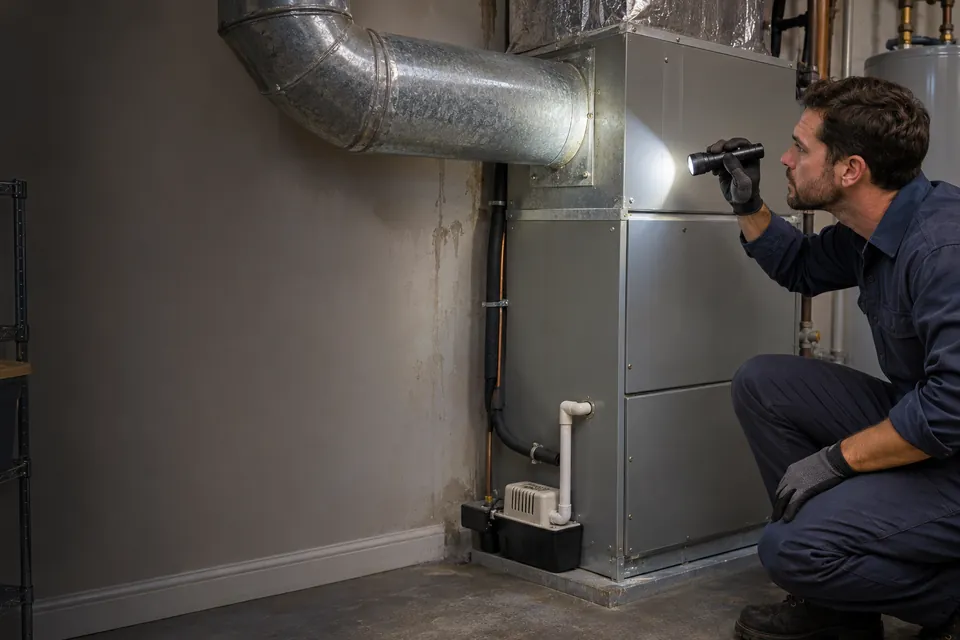
Call for HVAC mold remediation in Columbia, SC if you see growth near an air handler, return grille, or condensate pan. Describe where the concern sits so the equipment and nearby materials can be considered.
Describe whether the spotting is on the cabinet, inside an accessible area, or on adjacent building materials.
Tell the provider if water has overflowed, returned after cleaning, or affected the floor nearby.
Share whether an HVAC technician has already checked for a blockage or other drainage issue.
Report whether spotting is on the room surface, the grille, or a visible area farther inside.
HVAC mold removal or cleanup can involve evaluating visible deposits near the air handler, drain area or accessible return grille. Ask which equipment surfaces and surrounding building materials can be assessed, and confirm whether you need a separate HVAC technician for mechanical work.
| What you notice | What a provider checks | What to discuss next |
|---|---|---|
| Visible growth near the equipment cabinet | Review reachable surfaces and adjacent wall or floor material. | Determine which areas belong in the HVAC mold scope. |
| Moisture around the condensate drain | Check what got wet and review any mechanical findings. | Coordinate any separate HVAC repair and cleanup of affected materials. |
| Signs extend into the return or duct | Check what is visible from a safe, accessible location. | Discuss whether an air duct assessment or HVAC specialist is needed. |
Share whether the area has been inspected by an HVAC technician and if the growth appears on equipment or on the nearby wall or floor.
Air handler mold removal focuses on accessible components and the moisture around them. If you noticed air conditioning system mold or recurring dampness near an HVAC condensate pan, tell us whether a drain line issue or pooled water has already been reported.
If the air handler is in a closet and nearby wallboard got wet, describe both the equipment and the affected room surfaces. Ask who can evaluate any mechanical source.
Say whether the suspected growth is on the cabinet, near the pan, or at the return opening.
Mention water near the equipment, a backed-up drain line, or repeated moisture on accessible components.
Clarify which components are included and whether ductwork or a mechanical issue needs a separate review.
Confirm which accessible components and surrounding materials were assessed and whether the condensate pan, drain line, or affected ductwork needs a separate visit.
HVAC mold remediation can involve affected air-handling components. Air duct mold remediation focuses on affected duct surfaces or lining.
Say where the water reached, such as the closet floor or nearby drywall, and whether an HVAC technician has evaluated the drain.
Share when it starts and which rooms or vents you notice first. Those details can help the provider decide where equipment, nearby materials, or ductwork need review.
Confirm mechanical work directly with the provider. Cleaning mold-affected material and repairing a drain issue may require different trades.
Call Columbia Mold Remediation Pros to discuss hvac mold remediation and connect with an independent provider when available.
For HVAC mold concerns around Columbia, give the service address and say whether the issue is near equipment, a drain, or a return.
For Sumter or Aiken, call with the property ZIP code to check provider availability.