
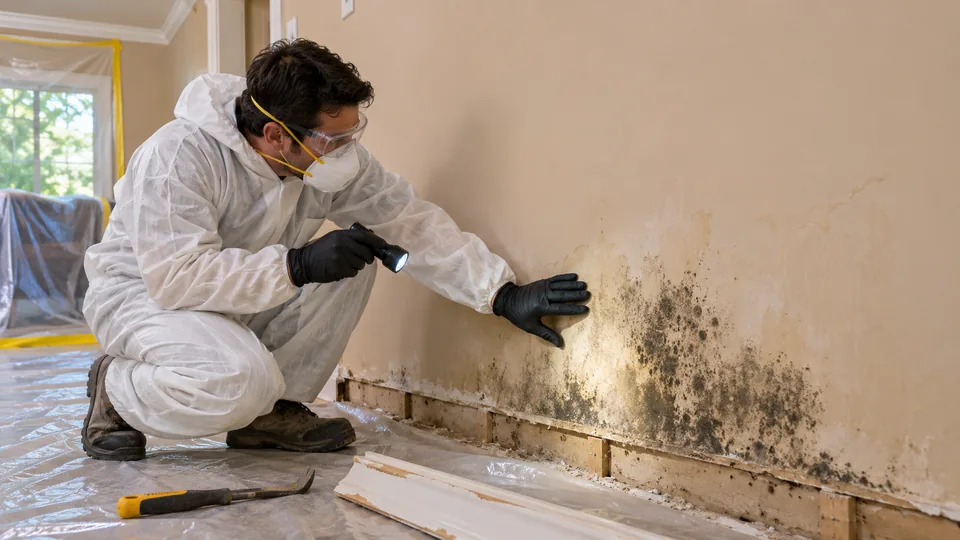
Mold near the bottom of a finished wall
Low stains or swollen trim can help show where water reached the wallboard.
Columbia, SC
Call for basement mold removal in Columbia, SC if growth appears along a finished wall, near masonry, or around lower-level flooring. Share whether it followed a leak or keeps returning.
Low stains or swollen trim can help show where water reached the wallboard.
Describe where the moisture appears and whether it returns near a wall joint or floor edge.
Tell us where it is strongest and whether boxes, paneling, or carpet cover nearby surfaces.
Explain whether water pooled below a fixture and if it reached a second room or flooring seam.
Basement mold treatment may involve reviewing foundation wall mold, masonry, wallboard and the edges of flooring. Foundation seepage can change the scope of work and may require separate correction. Explain whether the affected wall has paneling, drywall, or exposed masonry.
Review dampness, surface condition, and rain-related patterns. Discuss surface cleanup and whether seepage needs a separate fix.
Check wallboard edges, adjacent trim, and flooring. Consider whether the damaged finish needs opening or removal.
Review the water source and the flooring layers that may have stayed damp. Discuss access and whether subfloor materials need inspection.
Share whether the basement is finished and if the damp area changes after rain. If you know of a plumbing leak, tell us when the water stopped.
Basement mold remediation can involve both the finish and the wall behind it. Lower wall staining and damaged baseboards can indicate where to start. Tell us if lower-level mold began after rain, a plumbing problem, or longer periods of condensation.
A finished wall with a damp corner after rain presents a different problem from drywall affected by a plumbing spill. Mention the timing so the provider can focus on the likely route of the water.
Describe the lower wall, corners and floor perimeter where dampness or discoloration first appeared.
Check if the affected area continues behind trim or along a finished wall.
Clarify which surfaces may be cleaned and whether a source needs attention before rebuilding.
Ask how the basement can be checked after cleanup, especially along the wall base and beneath any flooring already lifted. Confirm who will address repeat dampness before replacing finishes.
It can return if the underlying moisture problem persists. Identifying whether water is coming through the wall or forming as condensation helps guide next steps.
It can, depending on access and damage. Call to discuss the wallboard, trim, and flooring edge so the provider can explain what may need assessment.
Rain-related dampness can point to seepage or another moisture source. Share the timing and the affected wall so a provider can decide where to assess first.
It can. Tell the provider if the paneling bulges, has low staining, or covers the site of an old leak. They can discuss whether access behind it is needed.
Call Columbia Mold Remediation Pros to discuss basement mold removal and connect with an independent provider when available.
Ask about basement mold removal for your Columbia-area property. Say whether the basement is finished and which wall or flooring edge looks affected.
For Sumter or Aiken, call with the property ZIP code to check provider availability.