
Spotting near a roof opening
A vent, flashing detail, or other roof opening can help narrow down a localized moisture pattern.
Columbia, SC
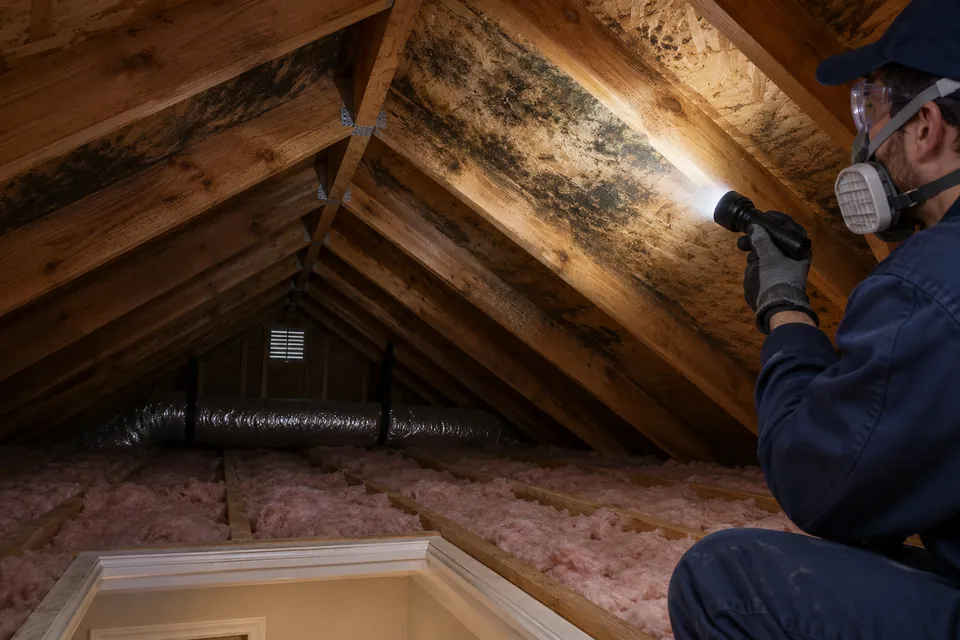
Call for attic mold removal in Columbia, SC if you see dark spotting on rafters or roof decking. Discuss which roof-space materials look affected and what attic mold remediation could include.
Attic mold cleanup takes its cues from the location of the growth. A patch below one roof opening may point to a different moisture problem than spotting across the underside of the roof decking. Note whether the marks appeared after rain or near an exhaust duct.
A small spot under a roof opening and a wide pattern on both roof slopes give the provider different clues. Report where you see the growth and whether rain or indoor humidity seems to change it.
A vent, flashing detail, or other roof opening can help narrow down a localized moisture pattern.
A broad pattern on the underside of the roof may call for a review of ventilation, condensation, or indoor air entering the attic.
Tell the provider if a bath fan duct appears disconnected or ends inside the attic.
Share if spotting continues across several rafters or toward framing that is hard to reach.
Describe the hatch location and whether growth is near one rafter or across several sections.
Review roof decking mold and any damp insulation near roof penetrations or exhaust outlets.
Discuss the condition of the wood, nearby insulation and any source repair the roof space still needs.
Review the affected decking, rafters, and adjacent insulation with the provider. Confirm what remains for a roofer or ventilation contractor before considering the attic issue resolved.
Attic mold remediation after a roof leak may involve accessible roof sheathing, rafter mold, and adjacent insulation. Ask how attic ventilation, condensation, or unresolved roof leaks affect the work. Confirm whether roof or ventilation repairs need separate coordination.
Review the nearby opening, staining, and roof repair history. Discuss local cleanup and whether a roofer needs to address the source.
Review the pattern along the roof slope and any ventilation or exhaust concerns. Determine which areas need attic mold remediation and separate moisture correction.
Identify which insulation and wood are reachable from the hatch. Discuss material handling and what should be reviewed before insulation goes back.
Tell us where the attic access is and whether a roofer or inspector has already noted moisture on the sheathing. From those details, the provider can discuss a suitable approach.
Color is a useful observation, but it cannot establish the cause by itself. An assessment considers the material, moisture pattern and location of the staining.
Discuss each part of the scope before scheduling. Attic mold treatment addresses affected materials, and a roof leak or ventilation defect may require a separate trade.
Ask about the insulation when you call. The provider can explain which sections they can reach and whether removal or replacement is separate.
Yes. Tell us where the hatch is and what makes access difficult. The provider can confirm what they need before visiting.
Call Columbia Mold Remediation Pros to discuss attic mold removal and connect with an independent provider when available.
For attic mold removal around Columbia, give the property ZIP code and tell the provider how the attic is accessed.
For Sumter or Aiken, call with the property ZIP code to check provider availability.